


Within the vast wilderness of the Amazon, a peculiar menace lurks beneath the surface of the river. Known as Candiru, or vampire fish, this tiny, translucent catfish has gained notoriety for its seemingly bizarre behavior and the unexpected harm it can inflict on humans.
Vandellia cirrhosa, or the Candiru, is a parasitic catfish species that belongs to the Trichomycteridae family. The Candiru is infamous for its parasitic nature, feeding off the blood of its larger host counterparts. Amazonian folklore paints a vivid and terrifying image of this elusive fish as a creature that supposedly targets human urethras, but is there any truth to these stories?
Historically, Candirus has been observed parasitizing larger fish species. They embed themselves into the gills of their hosts by utilizing backward-facing spines around their heads. Once there, they feed on the blood of the host fish using their razor-sharp teeth. But what drives these creatures to supposedly attack humans?
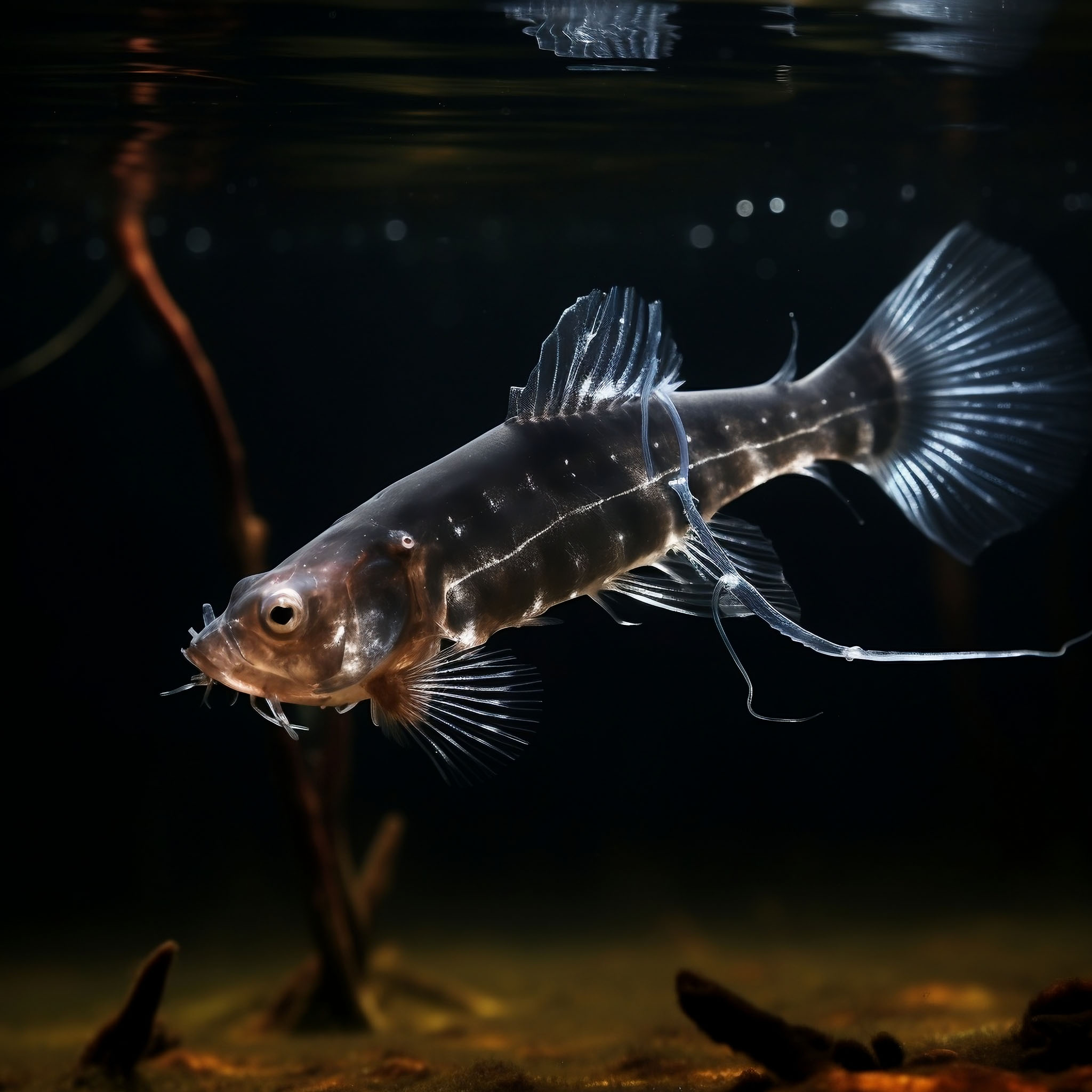
The theory is rooted in a sensory mechanism. Candirus, being largely blind, primarily relies on detecting nitrogenous waste expelled from the gills of fish, typically urea and ammonia, to locate their hosts. Humans also excrete urea, which may be detected by the fish, thus leading to incidents of parasitic invasion.
The 1997 case of a Brazilian man, reported by urologist Anoar Samad, stands out as the most substantiated case of a Candiru attack on a human. The man claimed that while urinating in a river, a Candiru swam up his urethra. This seemingly absurd incident is backed by medical documentation and remains the most credibly recorded instance of such an attack, contributing significantly to the reputation of the Candiru.
However, such occurrences are exceedingly rare, and while the Candiru's behavior may seem terrifying, one must remember that humans are not their typical hosts. Candiru's anatomical design is more suited for gill invasion in fish rather than human urethral or vaginal infestation. Despite this, the fear of the Candiru continues to be perpetuated, fueled by isolated anecdotes and tales.
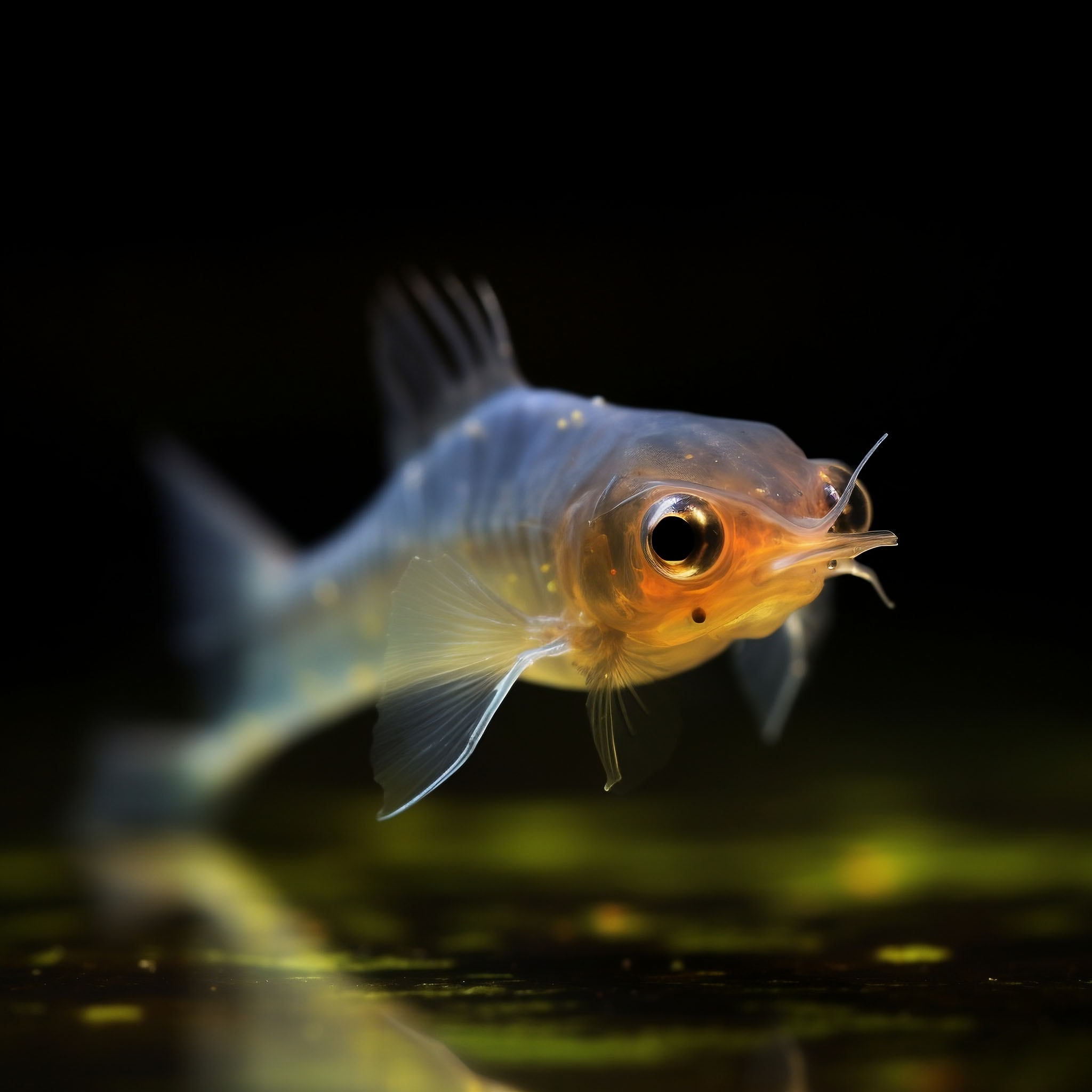
While cases of Candirus lodging in the human urethra are relatively well-known, the instances of larger Candiru species getting trapped in the vagina are not. Such an incident was reported in 2013, involving a woman bathing in the Amazon River. The woman felt an intrusive object enter her, causing severe discomfort and pain. Subsequent medical examination revealed a sizable Candiru lodged inside. Unlike the smaller species, which are about an inch in length, this one was larger, approximately six inches, and belonged to a different sub-family. Removal proved challenging due to the fish's backward-facing spines, designed to resist expulsion once they lodge into a host.
However, these events should be taken with a grain of salt. While they are undoubtedly horrific for the individuals involved, they are not common. Candiru attacks on humans are extremely rare, and one must remember that they are a result of mistaken identity rather than any malicious intent on the part of the fish.
To dispel some of the fear surrounding the Candiru, research has shown that these fish are far less likely to swarm towards human urine than initially believed. A 2001 study conducted by Stephen Spotte, a marine scientist, found no evidence that Candiru is attracted to urine's chemical components when expelled into water.

Despite this, the myth of the Candiru persists and continues to strike fear into the hearts of those venturing into the Amazonian waters. One might argue that these little parasitic catfish have become symbolic of the Amazon itself, a place of great beauty, complexity, and potential danger. Still, while the Candiru does present a curious case of parasitism and mistaken identity, it is but one oddity in an ecosystem teeming with unusual, incredible life.
So, while the tales of the Candiru may indeed send chills down your spine, remember that the likelihood of becoming a victim to one of these peculiar creatures is infinitesimally small. Enjoy the marvels of the Amazon, but as with any wild place, do so with caution and respect for the untamed world around you.
References:
- Spotte et al.'s study (2001) on the feeding behavior of the Candiru showed that these parasitic fish are less attracted to the chemical components of human urine than previously thought.
- The most credible case of a Candiru attack on a human was reported by Samad (1997), where a man claimed that a Candiru swam up his urethra while he was urinating in the Amazon River.
- According to Lima et al. (2013), larger Candirus from a different subfamily can also cause parasitic invasions, as evidenced by an incident involving a woman who had a sizable Candiru lodged inside her vagina.


