


As we continue to ride the wave of technological advancements, one of the most exciting developments in the world of robotics is the concept of electronic skin, or e-skin. This technology promises to equip our mechanical counterparts with a sensory perception that was once exclusively the realm of living creatures: touch.
For many years, robots have existed within a state of sensory deprivation. Despite their advanced computation and mechanical abilities, the lack of tactile sensation has always been a major barrier, limiting their scope of operation and interaction. However, with e-skin, robots can interact with their environment in a way that was previously unimaginable.
E-skin is a highly sensitive and flexible material designed to mimic the human skin's ability to perceive tactile stimuli. By incorporating thousands of miniaturized sensors, this 'skin' can measure different variables such as pressure, temperature, and even texture. It is a major leap forward, creating robots that not only understand their environment but also 'feel' it.
E-skin is not merely a theoretical concept anymore. Breakthroughs in nanotechnology and materials science have enabled researchers to create prototypes that can respond to different stimuli. These e-skins can react to the slightest touch, warmth, or changes in light, and researchers are continually developing them to mimic human sensitivity even more accurately.
In the realm of robotics, these advancements could redefine the way robots and humans interact. Until now, robots have primarily relied on visual and auditory cues to engage with humans. With the addition of tactile sensation, robots can become more responsive, adaptable, and intimate. They could respond to a comforting pat on the back or perceive a firm handshake's subtle nuances, making their responses more nuanced and personal.
By giving robots a sense of touch, we are not just enhancing their functionalities but also their potential to relate to humans. This intimacy could foster a new level of human-robot interaction, extending beyond mere functionality and efficiency. Robots with e-skin could offer companionship, emotional support, and even physical comfort to those in need. For instance, in healthcare, touch-sensitive robots could provide more personalised care, such as accurately gauging the level of pressure needed when assisting a patient to stand.
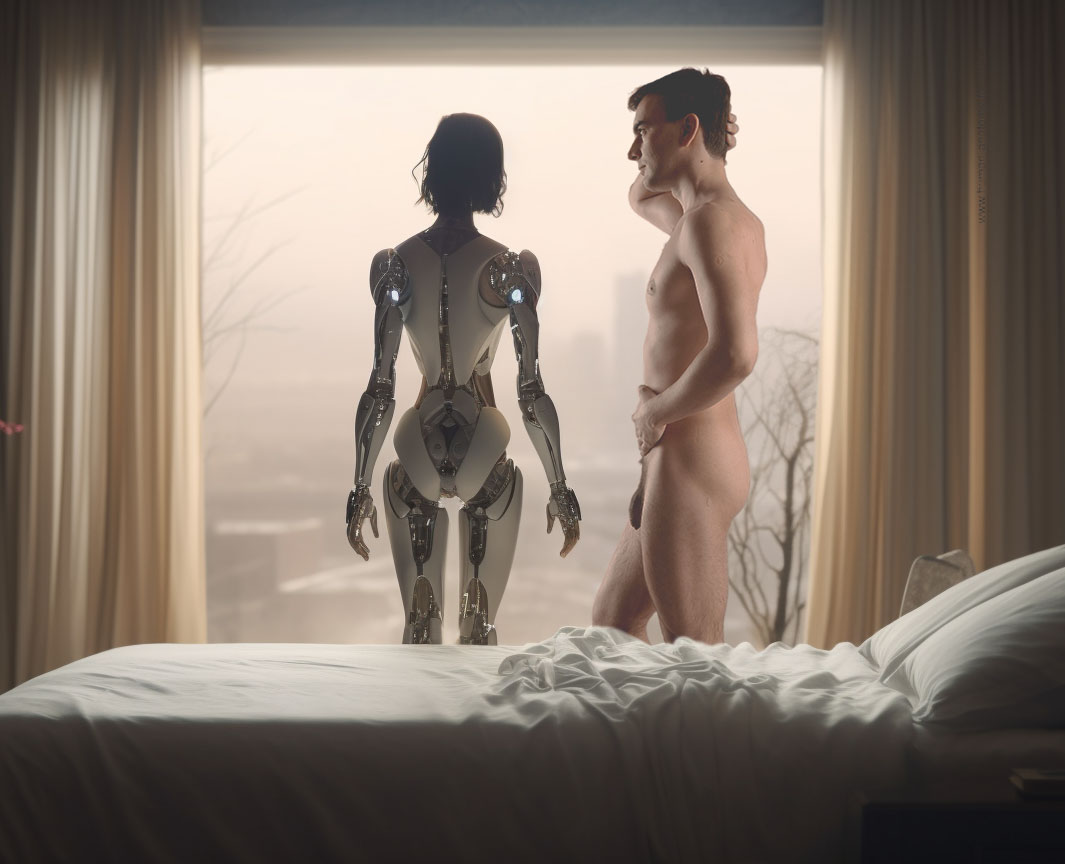
When it comes to robots in the home, could you imagine the possibilities, if your partner is away from home, you could essentially engage in sex with a robot that has a penis or vagina that feels each sensation allowing the robot to give pleasure to a man or woman who desires it? Perfect lovemaking with genitals that feel like the real thing but are placed on a robot. For women, it can be programmed to last longer allowing women to achieve intense orgasms each time they engage in sex with the robot, something that no human male can provide. The options are endless with the future advancements that are coming with e-skin and robots and the possibility to create genitals that look and feel like the real thing and have the selection of the genital size you desire.
However, as we move towards more human-like robots, there are ethical considerations to keep in mind. The intimacy brought on by these developments raises questions about the boundaries between humans and robots. Could a robot with the ability to feel touch develop emotional responses? If so, how would we navigate our relationship with them? As we continue to explore these frontiers, it's crucial to guide our steps with an understanding of their potential implications.
Nevertheless, the possibilities are endless. With e-skin, robots could serve not only as tools but also as partners, contributing to our society in ways we can only begin to imagine. This technology, while still in its nascent stages, holds the promise of creating a future where robots are more than just mechanical entities. Instead, they could be empathetic, intuitive, and, in a sense, more human.


